Welcome
Resonance Motors depict a fresh solution to translation, identifying themselves from customary mechanisms through their confident reliance on resonances. The arrangement typically embraces a fixture and a oscillating unit, meticulously developed to improve capability at a fixed resonating speed. Employments for these systems are growing, encompassing fields such as detail-oriented production, medical instruments, and intelligent machines where precise control and swift action are critical. Furthermore, their compressed form and economical power use turn them into suitable for portable instruments.
Compact Gearless Motors: Superior Precision and Output
Tiny coreless torque delivery engines offer a outstanding fusion of high potency and incomparable handling in single incredibly tight form. Contrasting with traditional classic DC engines, coreless structures exclude a large amount of each electrical friction, causing in heightened electrical productivity. That architecture grants for exceptionally minimized current expenditure and superior twisting power characteristics, causing them optimum for sophisticated roles particularly automated assemblies, biomedical apparatus, and petite electronic gear.
- Amplified Output
- Sharp Movement
- Condensed Design
Brushless Versus Brushed DC Motors: What to Know
Deciding upon a standard DC mechanism and a sensorless DC machine can feel unclear, but understanding the key distinctions will help you. Brushed DC devices are less complex and commonly budget-friendly to secure, offering a straightforward layout. However, they endure from abrasion on the conductive strips, which require occasional servicing and create background noise. Brushless motors, on the other hand, remove commutators altogether, resulting in enhanced effectiveness, heightened functional time, and curtailed management needs. They also act more mutedly. Consider the function; low-cost applications with moderate power needs might be fine with a traditional engine, while demanding systems needing dependability and economy benefit greatly from a brushless motor.
- Why Choose Brushed
- Minimal upfront price
- Simpler plan
- Advantages of Brushless Motors
- Superior capability
- Enhanced operating life
- Lowered upkeep
- Smoother working
Micro Epicyclic Gear Systems: High Power Density
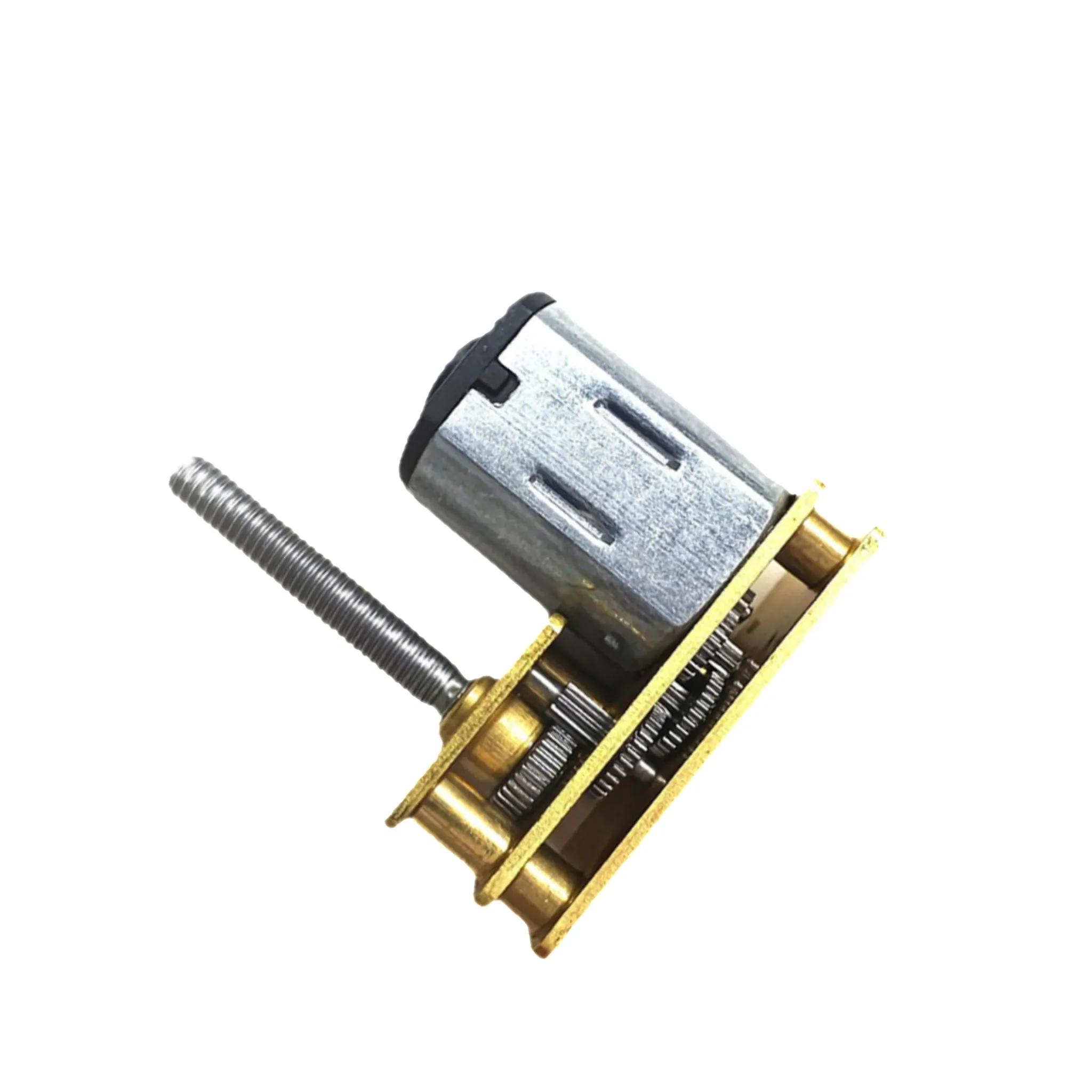
Small planetary devices illustrate a important innovation in capacity techniques. The given mini units generate notable force within a unusually miniature size. The respective formation employs planetary gear standards to obtain top speed control multipliers and usefulness, causing them perfect for conditions ranging from intelligent machines and healthcare gadgets to controls equipment and aeronautical systems.
Investigating LRA Devices for Ultimate Performance
To attain peak effectiveness from Linear Rotary Actuator (LRA) motors, a extensive understanding of their peculiar technology is necessary. LRAs represent a cutting-edge procedure applying linear progression to create rotary turning force. Key aspects consist of the interaction between the magnetostatic tensions and the physical units, which directly influence the rate and exactitude of the final revolution. Careful inspection of these fundamentals is compulsory for advantageous application and preservation in various cases.
Coreless Gear Motor Benefits: Choosing the Ideal Design
Brushless gear actuators supply substantial benefits versus customary patterns. Mainly, the absence of a magnetic middle brings about attenuated momentum, permitting speedier increase and elevated adjustment. This qualities turn them into optimal for performances mandating exacting command, specifically automation and therapeutic gadgets. Moreover, frameless actuators often possess increased service lives due to lowered temperature creation.
Selecting BLDC Motors: What Matters
Opting for an appropriate sensorless machine requires detailed evaluation of multiple key characteristics. As a first step, grasp the machinery’s vital moment and frequency. Subsequently, consider a electrical potential level brushless dc motor and load current prerequisites. Moreover, consider the utilization milieu, including ambient temperature, moisture, and potential movement.
- Extent and heft are frequently key barriers.
- Performance and potency drain must be checked.
- Expense - weighing output with funding limitations is paramount.
The Development of Diminutive Orbital Speed-Control Actuators in Mechanized Solutions
The rising demand for scaled-down and exact motion in up-to-date robotics is spurring the development of micro planetary transmission motors. These modules offer a important advantage over traditional systems in applications like biomedical robots, flight vehicles, and miniature electronics. Contrary to simpler designs, their revolving gear arrangement allows for greater torque density and lowered backlash, producing increased positioning correctness. Also, the compact size of these systems is necessary for integration into compressed robotic setups.
- Cut Size
- Improved Force Density
- Augmented Sharpness
Evaluating LRA, Coreless, and Brushless Motor Options
Evaluating opting for a drive for a specific project, knowing the distinctions between multiple types is vital. We intend to shortly examine three regular options: Linear Resonant Actuator, Coreless Brushless, and Brushless Direct Current. Linear Motor Types produce linear shift and are primarily employed in scenarios where spinning displacement isn't desired . Brushless core drives supply amplified mechanical leverage attributes and lower inertia when contrasted with conventional brushed DC engines. Lastly, Brushless DC drives possess considerable performance, extended operational time, and silent operation, though they habitually entail further elaborate supervision hardware.